Repair
A compatible welded repair can address limited damage when the existing membrane can be prepared and the underlying layers are serviceable.
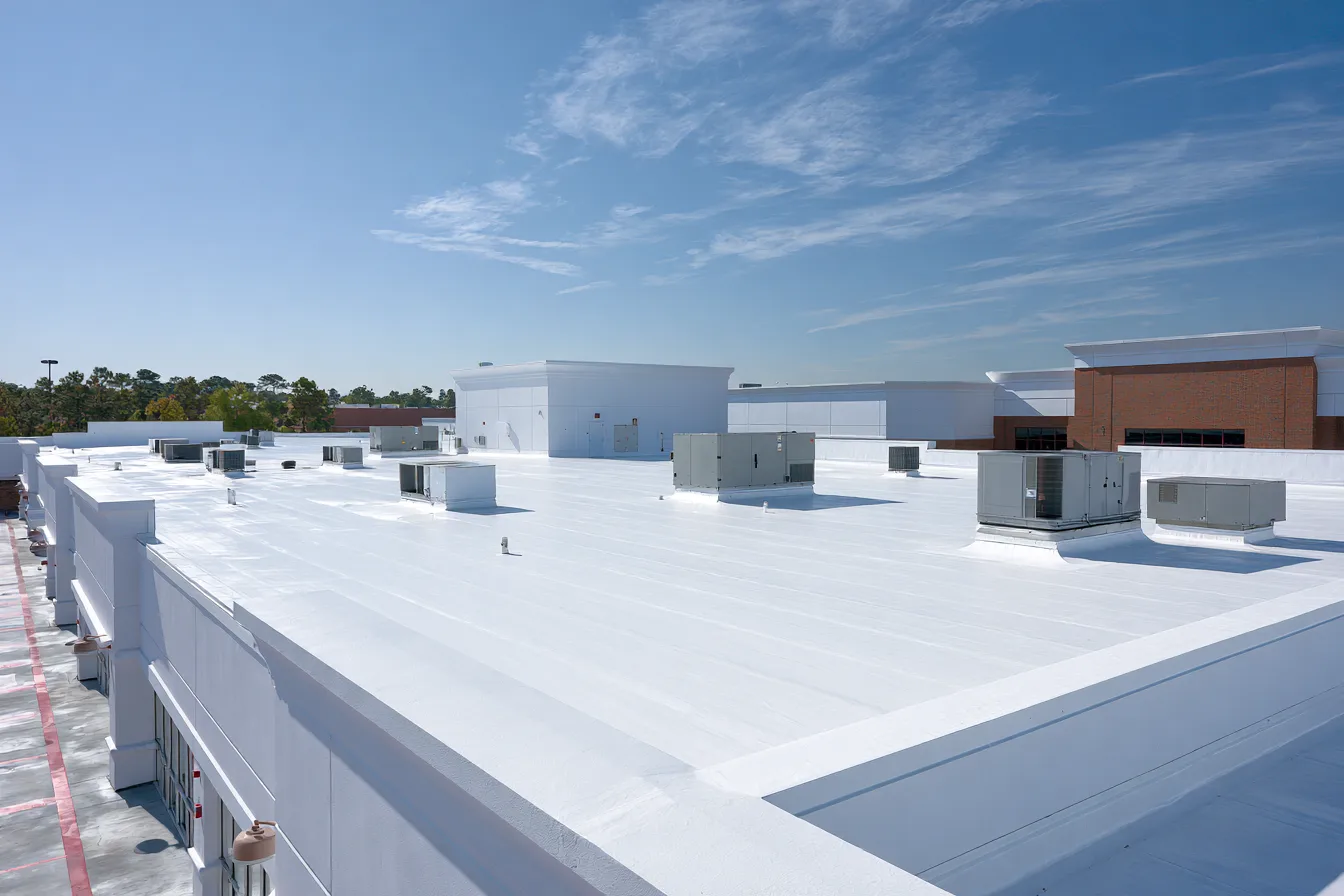
Plan TPO roof repair or replacement for your White Settlement building. Membrane choice, attachment, insulation and drainage need to work as one assembly.
TPO is a single-ply thermoplastic membrane. Heat-welded seams join the sheets, while flashings connect the membrane to curbs, walls and other interruptions. Those connections deserve careful attention in both a repair and a new installation.
The white surface is the visible part of an assembly. Insulation, attachment, edge securement and the supporting deck determine how the roof is put together. A product name alone is not a complete roofing specification.
A compatible welded repair can address limited damage when the existing membrane can be prepared and the underlying layers are serviceable.
A new assembly over an existing roof requires suitable conditions and compliance with the system and local requirements. Trapped moisture or unsound layers can rule it out.
Removal gives access to wet or deteriorated construction and allows drainage or insulation changes to be planned. It is the broader option when the old assembly cannot support reliable work.
Membrane thickness is one product choice. The installation also depends on a suitable deck, the specified insulation or cover board, the attachment pattern and the detailed connections at the perimeter. Those parts need to be selected as one system.
A recover needs an existing assembly suitable for the proposed system. Wet or unsound layers are not made serviceable by a new sheet above them. Where removal is needed, the exposed supporting surface becomes part of the work.
In a conventional mechanically attached system, fasteners and plates secure the membrane to the deck along the sheet laps, which are covered and heat-welded. An adhered system bonds the sheet to a suitable secured substrate. The deck, insulation or cover board and selected assembly must support that method. This changes fastening, surface preparation and adhesive work, not just the label on the membrane roll.
Heat welding joins TPO sheets; clean seam areas and properly set equipment matter to that connection. Checking the welds during installation helps identify openings before the roof is considered complete.
The field membrane needs secure terminations and compatible flashing at each interruption. The scope should describe those details, including how roof access and future equipment service will avoid damaging the finished system. Opened roof areas also need a planned weather-protection sequence while the work advances.
For a leak on an existing membrane, start with flat roof repair before assuming the entire roof needs replacement.
| Proposal detail | What to account for |
|---|---|
| Attachment and edges | The selected attachment changes fasteners, substrate preparation or bonding work. Insulation securement, roof edges and the deck remain part of that assembly; adhering the visible sheet does not eliminate the need to secure what is beneath it. |
| Insulation and drainage | Thickness, moisture condition and slope affect more than comfort. They also affect whether water reaches the outlets and whether a recover is appropriate. |
| Equipment access | Walkway pads and access routes can help separate routine service traffic from sensitive roof details. New equipment supports should be coordinated with the roofing system. |
Removal, material staging and access to the roof affect more than the roof surface. Deliveries, tenant entrances and rooftop equipment service need to be considered when the sequence is planned. The chosen attachment method also affects the work arrangements; it does not justify a blanket promise of no noise or odor.
Budget comparisons should include the same insulation, cover board, edge and flashing scope. A thicker membrane is not a substitute for missing drainage work or a sound deck. If the proposal retains existing layers, the condition supporting that decision should be clear.
Use the building-use planner to identify access restrictions or known equipment work. Those practical details help start the conversation; you do not need to specify a membrane or design the attachment system.
No. White membranes and coatings can look similar. Product records and close assessment help identify the system before choosing a repair material.
It can be possible, but the membrane condition, cleanliness and ability to form a sound bond must be assessed. A compatible repair over workable material is the starting point.
Coverage depends on the manufacturer, system, installation requirements and written terms offered for that project. No manufacturer approval or fixed warranty term is promised by this page.
Bring the building and the roof system into the same plan. Request a commercial roof inspection.